> For the complete documentation index, see [llms.txt](https://docs.patchmypc.com/llms.txt). Markdown versions of documentation pages are available by appending `.md` to page URLs; this page is available as [Markdown](https://docs.patchmypc.com/patch-my-pc-cloud/custom-apps/update-a-custom-app.md).
# Update a Custom App
*Applies to: Patch My PC Cloud Custom Apps*
Once you have created and deployed a Custom App, you will probably need to update it at some point to a later version.
{% hint style="info" %}
Note
See [Modifying a Custom App](/patch-my-pc-cloud/custom-apps/modify-a-custom-app.md) for details on how to make other changes to an existing Custom App.
{% endhint %}
To update a Custom App using Patch My PC (PMPC) Cloud:
1. Sign in to the PMPC portal .
2. On the **App Catalog** page, search for the relevant app.
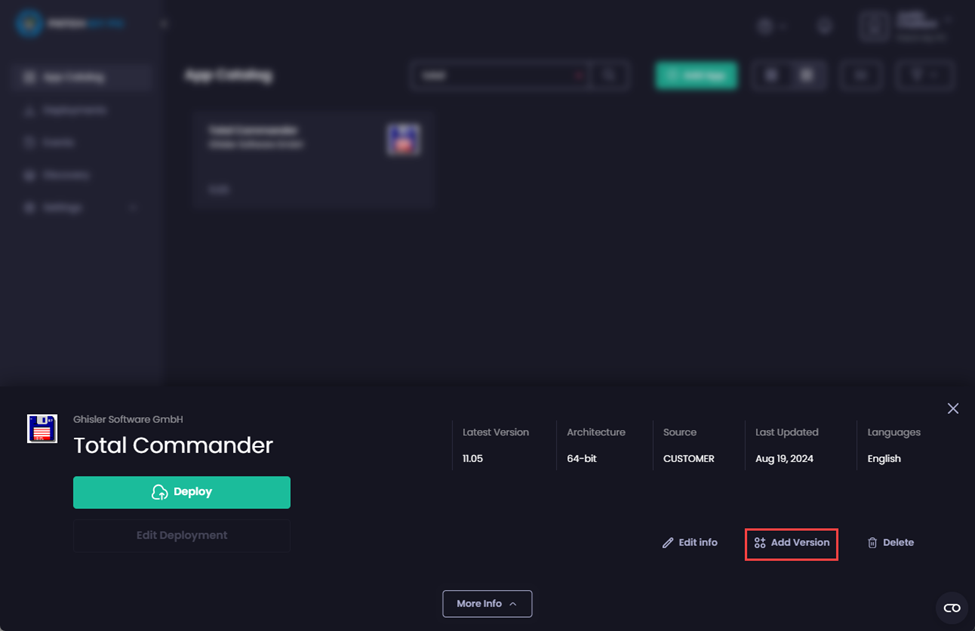
3. Click the app to open it.
4. On the app’s properties page, click **Add Version**.
The Custom Apps Deployment Wizard starts and opens at the **File** page.
{% hint style="info" %}
**Note**
You cannot modify the **Installer Type** of a Custom App.
{% endhint %}
5. Follow the respective section for the respective **Installer Type** of this app:
1. [Add a new version based on a new Installer Script](#add-a-new-version-based-on-a-new-installer-script)
2. [Add a new version based on a new Installer File](#add-a-new-version-based-on-a-new-installer-file)
## Add a new version based on a new Installer Script
To add a new version of a Custom App based on a new installer script, follow the [Add the Installation Script](/patch-my-pc-cloud/custom-apps/create-a-custom-app/custom-apps-file-tab.md#add-the-installation-script) section of [Custom Apps "File" tab](/patch-my-pc-cloud/custom-apps/create-a-custom-app/custom-apps-file-tab.md).
Once completed, goto Step 6.
## Add a new version based on a new Installer File
To add a new version of a Custom App based on a new installer file, on the **Add Version** page, either:
* Click **Add Primary Install File** and browse to the location containing the updated version of the app’s installer (EXE or MSI).
* Drag and drop the installer file onto this page.
The hash for the file is calculated as the file is uploaded to your portal.
Once completed, goto Step 6.
6. If the installer does not require any additional files or folders, go to Step 8.
7. If the installer does require additional files or folders, either:
1. Click the relevant **Add** button and browse to the location containing the additional files/folders.
2. Drag and drop the files onto this page.
{% hint style="info" %}
**Note**
If you choose to upload additional folders, you will be prompted to confirm you trust this site:
{% endhint %}
8. Once the files/folders have been uploaded, click **Next**.
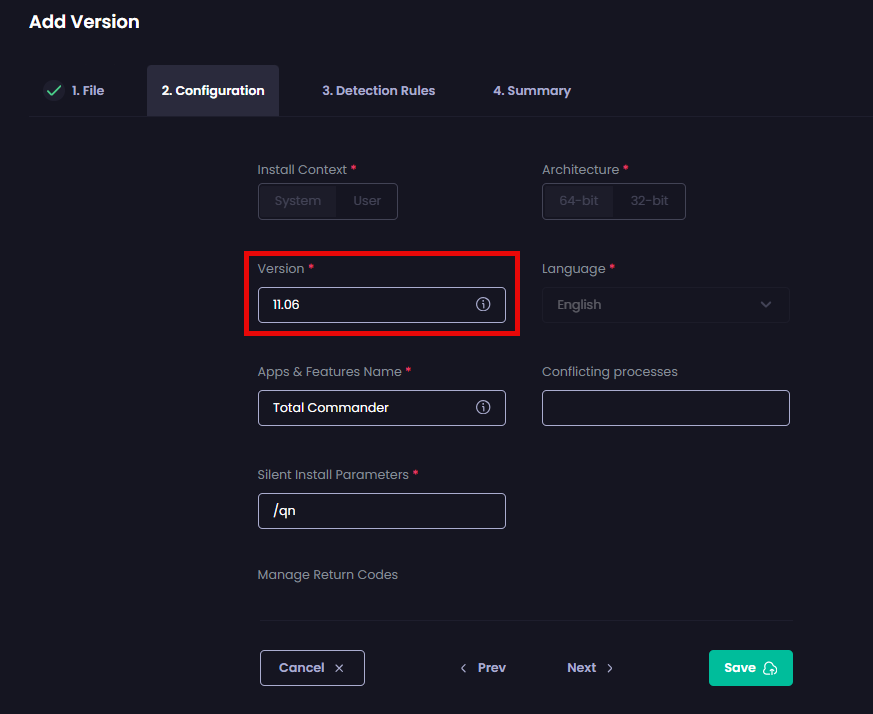
9. On the **Configuration** page, enter the version number and update any other fields as required.
{% hint style="info" %}
**Note**
If a Return Code defined in a Custom App has the same value but a different **Code type** to that defined in the deployment, the settings in the deployment take precedence.
{% endhint %}
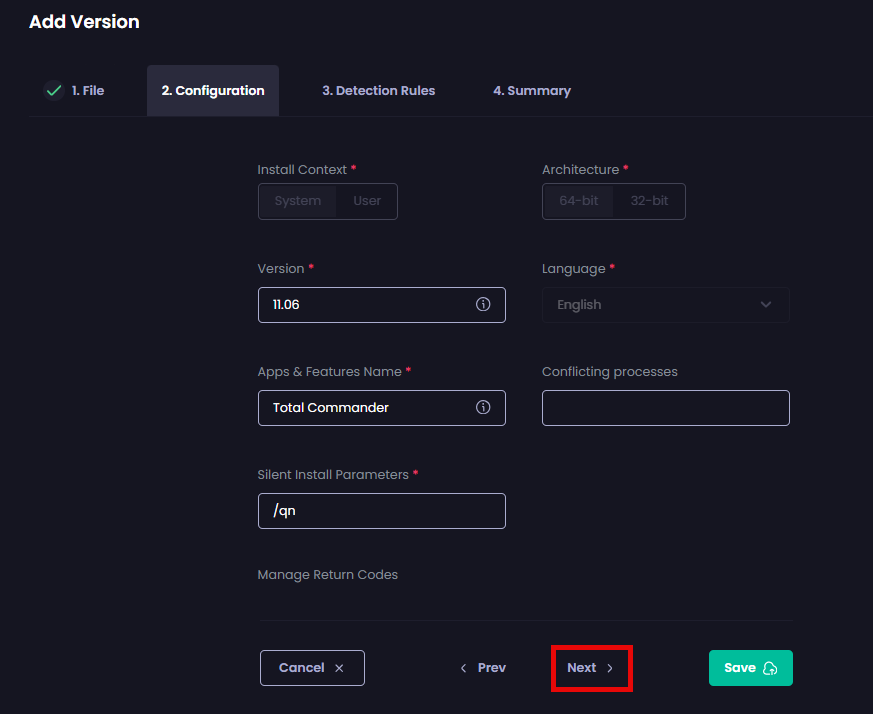
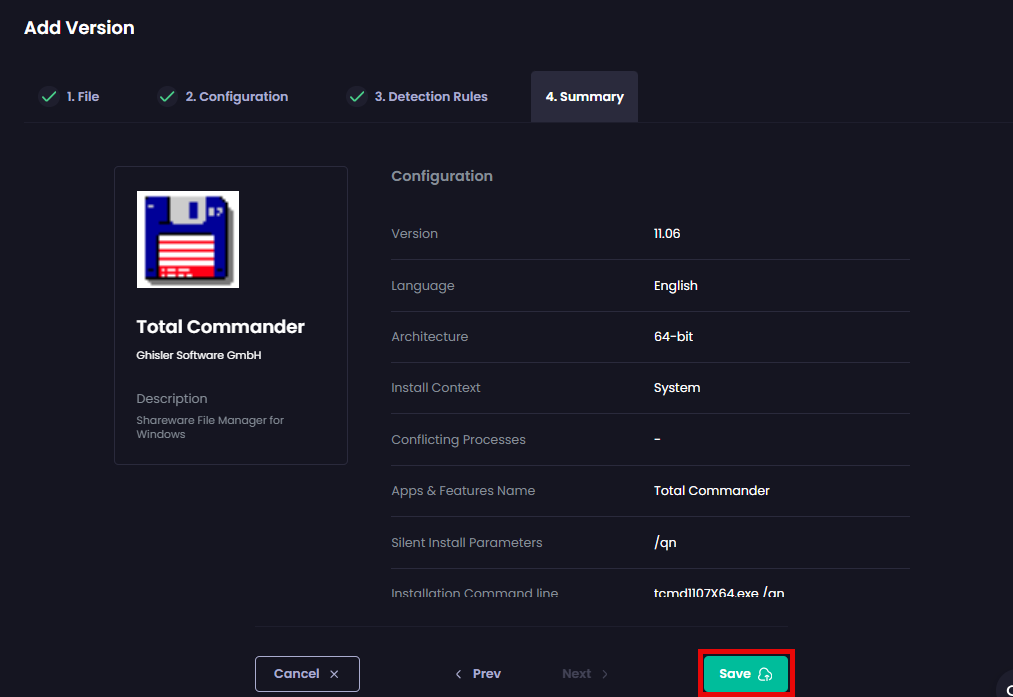
10. If you are happy you have entered all of the details for the app correctly, click **Save** otherwise, click **Next**.
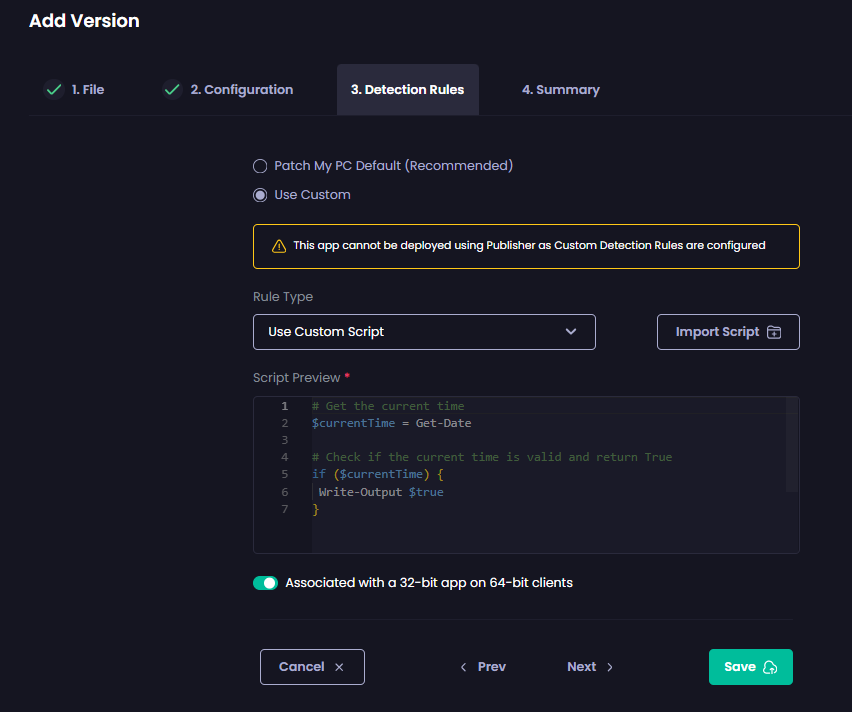
11. On the **Detection Rules** page, make any required changes.
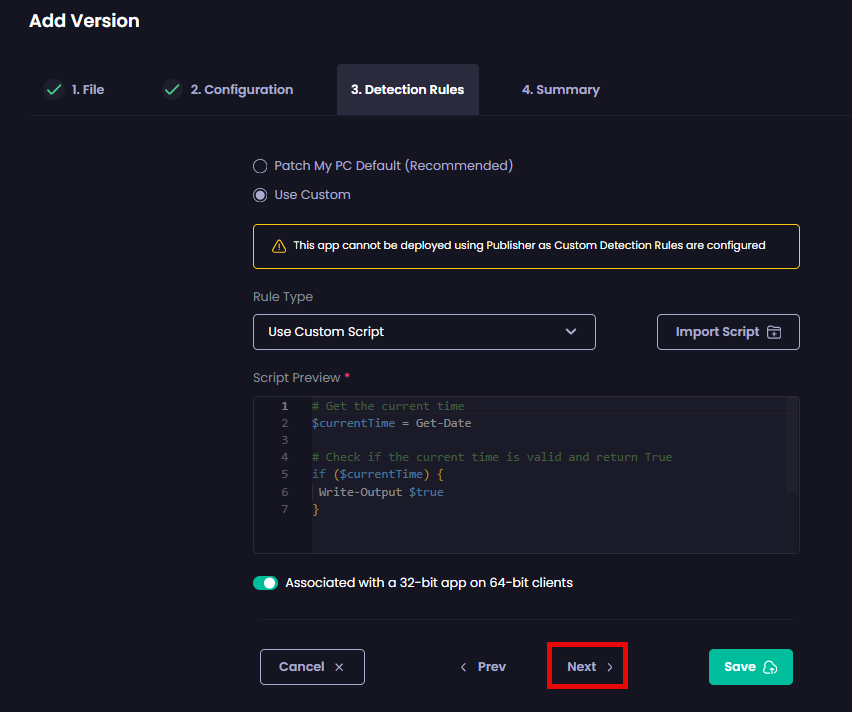
12. If you are happy you have entered all of the details for the app correctly, click **Save** otherwise, click **Next**.
13. On the **Summary** page, review you have configured the app correctly.
1. If you are happy, click **Create**.
2. If you need to change something, click **< Prev** to backtrack through the Deployment Wizard to the relevant setting. Make the change, then step back through the wizard to this page. If everything is now correct, click **Create**.
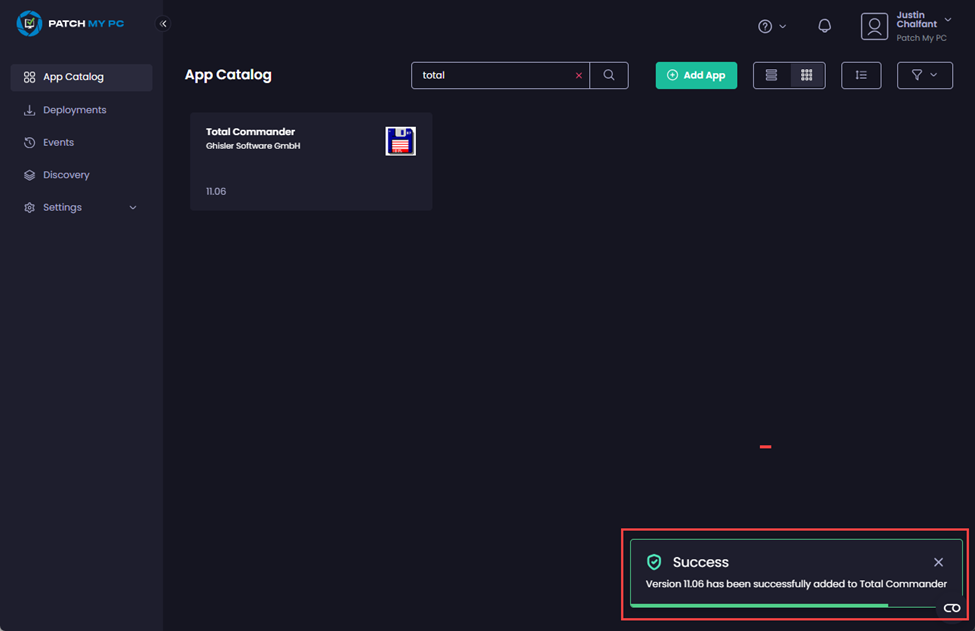
11. The App Catalog is displayed showing the version of the app along with the following notification:\
\
**Success Version <*****version\_number*****> has been successfully added to <*****app\_name*****>**.
If the previous version of the app was deployed successfully, depending on the configured assignments, the new version will be installed the next time the daily sync runs.
Alternatively, you can use the [Sync Now](/patch-my-pc-cloud/deployments/manage-deployments/updates/sync-now.md) process to update the app immediately without waiting for the next daily sync to run.
---
# Agent Instructions
This documentation is published with GitBook. GitBook is the documentation platform designed so that both humans and AI agents can read, navigate, and reason over technical content effectively. Learn more at gitbook.com.
## Querying This Documentation
If you need additional information that is not directly available in this page, you can query the documentation by asking a question.
Perform an HTTP GET request on the following URL with the `ask` and `goal` query parameters:
```
GET https://docs.patchmypc.com/patch-my-pc-cloud/custom-apps/update-a-custom-app.md?ask=&goal=
```
`ask` is the immediate question: it should be specific, self-contained, and written in natural language.
`goal` is what the user is ultimately trying to achieve, the reason they need the answer. Sharing it helps GitBook give you a better, more relevant answer. A goal is most helpful when it describes the outcome the user wants rather than restating the question. For example, with `ask=how do I create an API token`, a goal like `automate deployments from our CI pipeline` lets GitBook tailor the answer to that use case.
The response will contain a direct answer to the question and relevant excerpts and sources from the documentation.
Use this mechanism when the answer is not explicitly present in the current page, you need clarification or additional context, or you want to retrieve related documentation sections.
.png?alt=media)


 {% endhint %}
8. Once the files/folders have been uploaded, click **Next**.
{% endhint %}
8. Once the files/folders have been uploaded, click **Next**.